Daylight-balanced
Honest 250D
For daylight and natural light.
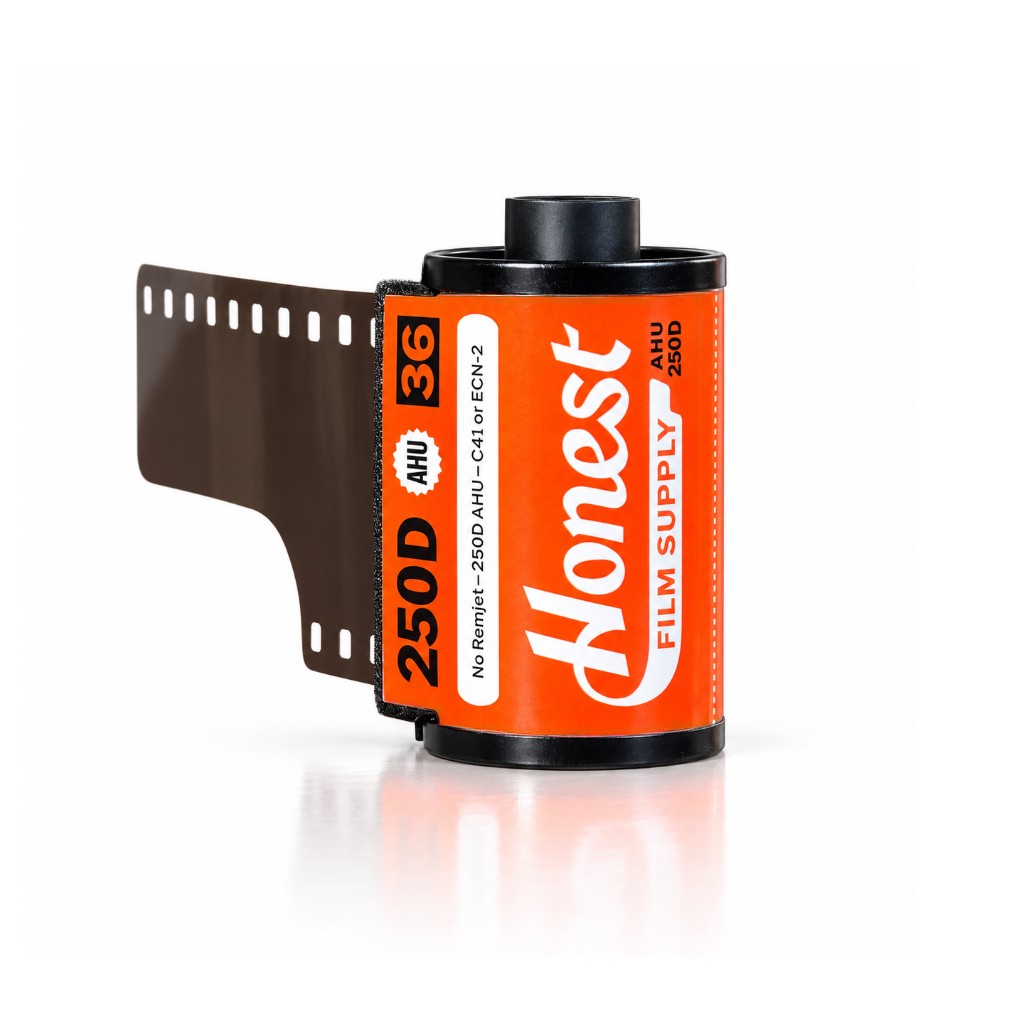
$15 per roll

Daylight or Tungsten balanced.
Independently loaded
into 35mm
cassettes by Honest Film Supply.
Daylight-balanced
For daylight and natural light.
$15 per roll
Tungsten-balanced
For evenings and warm artificial light.
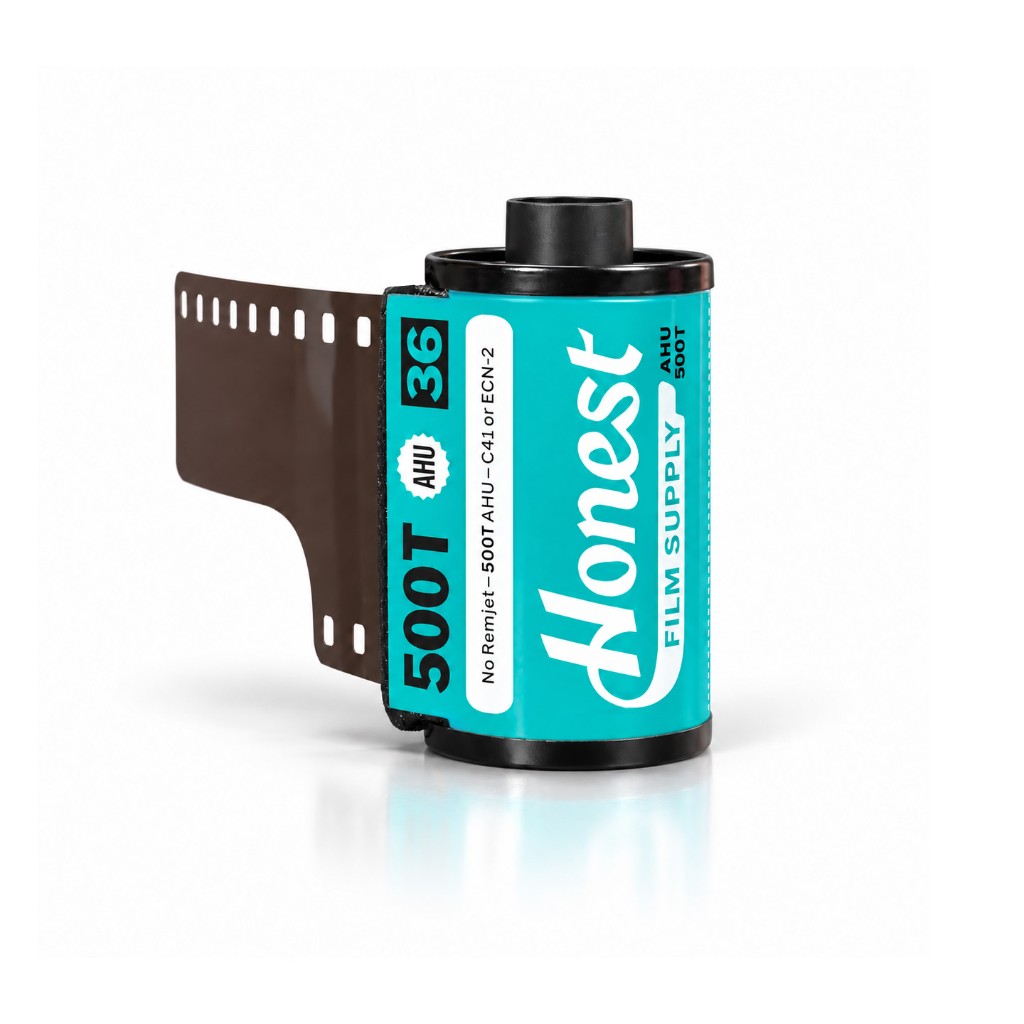
$15 per roll
Two motion-picture stocks, ready for your
35mm camera. Both are manufactured
without remjet backing and can be
developed in C-41 or ECN-2.
Choose 250D for outdoor daytime photography and natural light. Choose 500T for outdoor evening photography, indoor portraits, and warm artificial light. In daylight, 500T gives a cooler color balance.
Both stocks can be processed in C-41 or ECN-2. They are manufactured without remjet backing, so there is no remjet layer to remove.
ECN-2 is the film’s intended process and typically gives a flatter look with lower contrast and more restrained saturation. C-41 typically produces stronger contrast and saturation. Scanning and editing also affect the final look.
Standard rolls are not DX-coded. Use a camera with manual ISO control, or choose our optional DX-coding service for compatible automatic cameras. Automatic cameras handle non-DX-coded film differently, so check your camera’s instructions before loading.
There’s no single “right” setting. The manufacturer’s recommended ISO is printed on each cassette. Experiment with other ISO ratings and processing techniques to find the look you like.